Klaviyo Abandoned Cart Flow: Timing, Emails and SMS
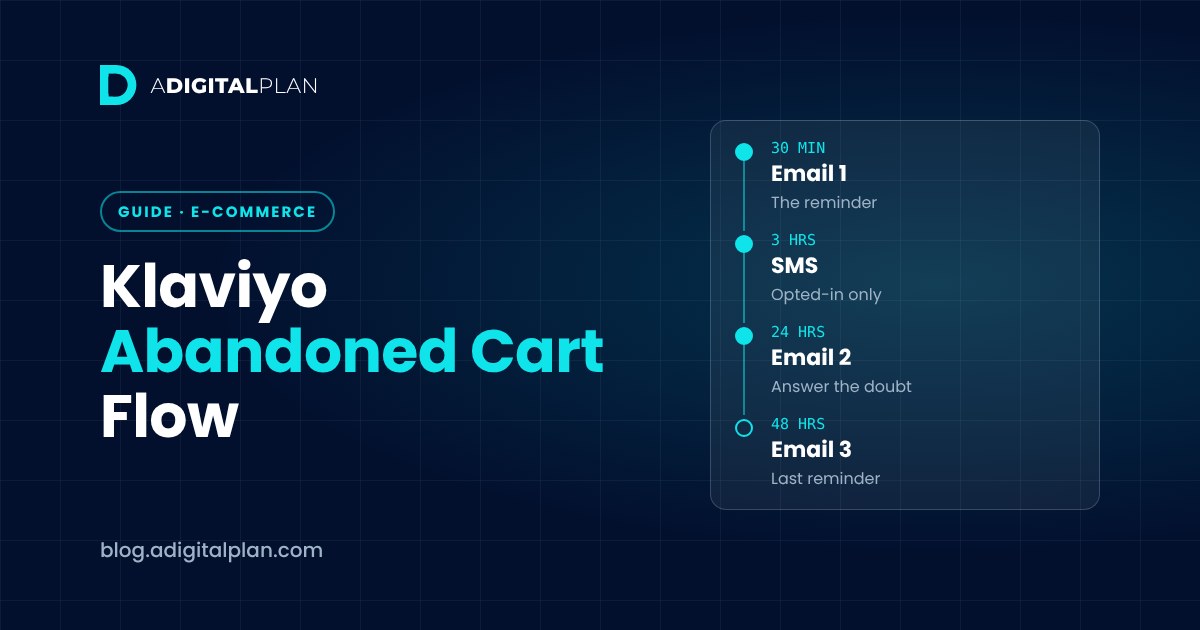
A good Klaviyo abandoned cart flow sends three emails and one SMS over two days: a plain reminder at 30 minutes, a text at 3 hours to people who agreed to texts, an email answering the buyer’s main doubt at 24 hours, and a last reminder at 48 hours. Only the last message may carry an incentive, and the whole flow stops the moment the person places an order.
This guide is for online store owners, from beginner to expert, who use Klaviyo or are moving to it. It covers the timing, what goes in each message, how to build it in Klaviyo and the rules that keep it from costing you profit or trust.
Want the flow written for your own store? The free Recover Your Abandoned Carts course builds every message, the consent rules and a test checklist in about 51 minutes of lessons.
Start the free course →Why the default abandoned cart flow underperforms
A buyer who reached the cart was close to a purchase. Something stopped them. They got distracted, saw the delivery charge, wanted to compare, or weren’t sure. Without a follow-up, that’s a lost sale. Your abandoned cart flow has three jobs: remind them, answer the doubt, and make it easy to finish.
Most default flows do only the first job, and some do it badly:
- One generic reminder. It brings back the distracted buyer but never answers the doubt that stopped everyone else.
- A discount in the first email. It gives profit away to people who would have bought anyway, and it teaches regular buyers to leave carts and wait for a code.
- Texts to people who never agreed. That breaks the rules in many countries and damages the brand.
- Messages that keep coming after the order. Nothing loses trust faster than a “Did you forget something?” email the day after someone paid.
Fixing these is less about Klaviyo settings and more about deciding what each message is for.
Abandoned cart or abandoned checkout flow?
Klaviyo can react to two moments. An abandoned cart is someone who added to cart but didn’t start checkout. An abandoned checkout is someone who started checkout and left, usually after typing their email address.
The flow in this guide is an abandoned checkout flow: every time counts from when the checkout was abandoned. That’s where you have an email address to send to, and shoppers who reach the checkout page show higher purchase intent than those who only added to cart. Klaviyo’s abandoned cart flow is normally triggered by a started checkout event from your store integration, while “added to cart” and abandoned browse flows catch earlier moments. Check Klaviyo’s current help docs for the exact trigger names your integration offers.
Start with the checkout flow. Separating flows by intent keeps each message relevant, so add earlier abandoned browse or cart flows later, and make sure they don’t stack messages on the same person.
The timing: how many abandoned cart emails, and when
Here’s the full sequence. Times count from when the checkout was abandoned.
| When | Message | Job | Incentive? |
|---|---|---|---|
| 30 minutes | Email 1 | Remind: the item, a photo, the cart link, delivery and returns terms | No |
| 3 hours | SMS | A short nudge, only to people who ticked the separate SMS box | No |
| 24 hours | Email 2 | Answer the top question or worry, with 2 or 3 real reviews | No |
| 48 hours | Email 3 | The last reminder | The only message that may carry one |
So the answer to “how many abandoned cart emails?” is three, plus one text. One reminder isn’t enough because it never answers the doubt. More than three starts to feel like chasing.
On abandoned cart email timing, some guides suggest waiting a few hours before the first email. The course sends Email 1 at 30 minutes because the distracted buyer is the easiest one to win back, and the longer you wait, the colder that cart gets. Whatever you choose, keep the order: reminder first, answer second, incentive (if any) last.
What goes in each abandoned cart message
Email 1 at 30 minutes: the reminder
Keep it plain. Show the item they left, a photo, a clear link back to their cart, and your delivery and returns terms in a line or two. No discount.
Klaviyo, like most platforms, can pull the abandoned items into the email with a dynamic content or product block, so each person sees what they actually left. Personalise with their first name if you have it, and make the button go straight back to their cart. Check Klaviyo’s current help docs for the block to use with your store.
Delivery and returns terms belong here because a cost or delivery surprise is one of the six reasons buyers leave, covered below. If your policy has a free shipping threshold, say so in plain words.
Keep subject lines plain too. A subject that says what the email is about (for example “Your cart is saved”) beats a clever one.
Email 2 at 24 hours: the answer
This is the email most flows skip, and it’s the one that does the most work. It answers the single most common question or worry your buyers have, using only what your policy says.
To find that worry, the course sorts 20 to 50 customer questions and 10 to 30 reviews into six reasons buyers leave:
- Cost or delivery surprise
- Comparing
- Not ready yet
- Distraction
- Trust
- Effort
Whichever reason comes up most becomes the subject of Email 2. Then add social proof: 2 or 3 real reviews that speak to that worry, quoted word for word. Never edit, combine or write reviews. If the words aren’t the customer’s, they aren’t proof.
Email 3 at 48 hours: the last reminder
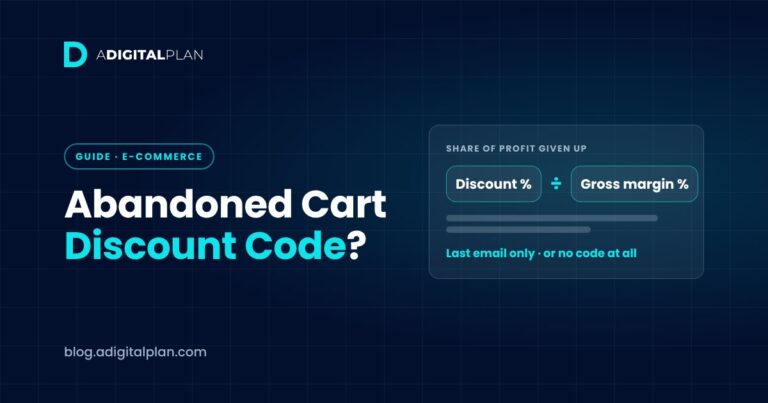
A short, final nudge. This is the only message in the flow that may carry an incentive, and you don’t have to offer one. Decide with a simple sum rather than a hunch: share of profit given up = discount % ÷ gross margin %. At a 40% margin, 10% off gives up a quarter of the profit on the order.
The full reasoning, including when to skip a discount altogether, is in how to decide on an abandoned cart discount code.
The SMS at 3 hours
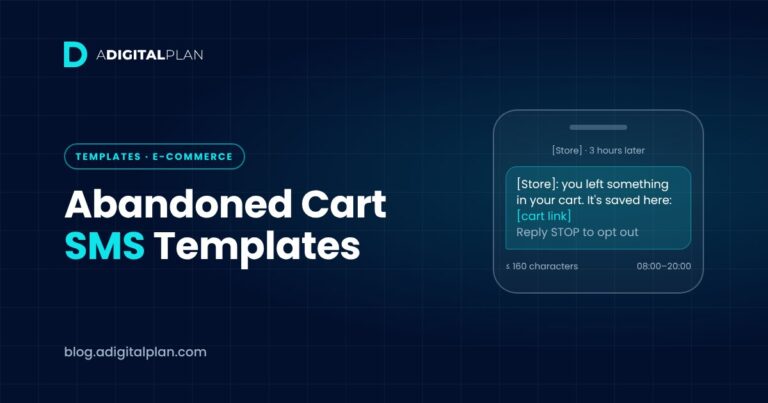
One text, sent only to people who ticked the separate SMS marketing box. It includes your store name, the cart link and “Reply STOP to opt out”, stays at 160 characters or fewer, and goes out between 08:00 and 20:00 only.
For wording you can adapt, see these abandoned cart SMS templates with the consent rules.
How to build the flow in Klaviyo
The course splits the work over a weekend: write on Saturday, build and test on Sunday. In Klaviyo, the build looks like this:
- Create the flow. Start an abandoned cart flow triggered by started checkout, either from a Klaviyo template you adapt or from scratch.
- Add the delays. The messages go at 30 minutes, 3 hours, 24 hours and 48 hours from the abandoned checkout. In most flow builders each delay counts from the previous step, so the gaps are 30 minutes, 2 hours 30 minutes, 21 hours and 24 hours.
- Add flow filters. Exit anyone who has placed an order since the flow started. This is what stops the “Did you forget?” email after someone paid.
- Gate the SMS. Put the text behind a conditional split, or the equivalent consent check, so it only goes to people who gave SMS consent.
- Paste in your messages and the cart link, and check every link works.
- Test with a real cart, message by message, then switch it on.
Exact menu names change, so check Klaviyo’s current help docs for the trigger, filter and split settings as you go.
Klaviyo settings checklist
These are the setting names Klaviyo’s own help articles use at the time of writing. Labels can change, so confirm each one in your account as you build your Klaviyo flow:
- Trigger. A metric trigger on Started Checkout. Klaviyo also offers a separate flow triggered by Added to Cart for cart abandoners who never reach the checkout page.
- Stop after purchase. A flow filter under “What someone has done (or not done)”: Placed Order zero times since starting this flow.
- Stop overlap. If you run an Added to Cart flow too, Klaviyo suggests the filter Started Checkout zero times since starting this flow on that one, so a shopper isn’t in both.
- Stop repeats. The filter Has not been in this flow for a set number of days stops someone who abandons often from getting the same emails every week.
- Gate the SMS. A conditional split on whether someone can or cannot receive marketing, set to text message marketing, so only people with SMS consent get the text.
- Quiet hours. Klaviyo turns quiet hours on by default for SMS. Leave them on.
- The abandoned items. A dynamic content block in the email shows each customer’s cart: product image, title, quantity and price.
One timing note. Klaviyo’s own guide suggests a first message 2 to 4 hours after checkout starts, and a delay of at least 1 hour 15 minutes where an integration syncs checkout data slowly. The course sends Email 1 at 30 minutes. If your store’s integration is slow to sync, the cart data may not be there yet, so test with a real cart and move Email 1 later if the products don’t show.
Abandoned cart flow best practice: quick checks before you switch it on
- Every link goes to the customer’s cart, not your homepage or product pages.
- Delivery costs and any free shipping threshold match your current policy.
- The final email is the only one with an incentive, and there’s no fake “limited time offer” countdown.
- First-time buyers and repeat customers both make sense of the copy. If your returning customers abandon often, consider a different timing for them.
- A test order removes you from the flow straight away.
Checkout abandonment is normal. The aim isn’t to chase every cart but to recover the lost revenue you can without giving away margin or trust.
Exit rules that protect trust
Three rules apply to every flow, not just this one:
- Stop the moment the person orders. Your flow filters handle this, but test it.
- One email a day per person, across flows and campaigns. If someone is in your cart flow, they shouldn’t also get today’s newsletter on top of it.
- Remove anyone who unsubscribes or replies STOP at once.
Consent: keep it simple
Cart emails are direct marketing, so you need a lawful basis to send them, such as consent, or in the UK the soft opt-in, which has its own conditions. The course also gives texts their own separate tick box, which is stricter than some rules require. Rules differ by country (PECR and the ICO’s guidance in the UK, rules such as the TCPA in the US), so check the current guidance where you sell. If you’re unsure whether you can message someone, don’t send. This isn’t legal advice.
Measure the flow
Once a month, monitor five key metrics for the abandoned checkout email flow:
- Checkouts entering the flow
- Recovered orders
- Revenue from the flow
- Unsubscribes
- Spam complaints (keep below 0.3%, and aim for below 0.1%)
Opens aren’t a success measure. A flow can have high opens and recover nothing. Look at recovered orders and revenue first, then change one message at a time.
Revenue isn’t only about how many carts you win back. For an e-commerce store selling gym supplements, we also added an upsell to the abandoned cart email, and it increased average order value (AOV) by 20%. Measure order value alongside recovered orders, because a recovered cart can be worth more than the one that was left.
Frequently asked questions
How many emails should be in an abandoned cart flow?
Three, plus one SMS for people who agreed to texts. A reminder, an answer to the top doubt, and a last reminder. One reminder alone never answers why the buyer stopped.
When should the first abandoned cart email go out?
The course sends it 30 minutes after the checkout was abandoned, with no discount. Some guides suggest a few hours. Test what suits your store, but keep the reminder first and any incentive last.
Should my Klaviyo abandoned cart email include a discount?
Not the first one. If you offer an incentive at all, put it in the last email only, and work out what it costs you first with the discount sum.
How do I stop abandoned cart emails after someone buys?
Add a flow filter that removes anyone with a placed order since entering the flow, then test it with a real cart. Check Klaviyo’s current help docs for the filter wording.
Are abandoned cart emails legal?
They’re direct marketing, so you need consent or another lawful basis, such as the UK soft opt-in, and the course gives texts a separate tick box. Check the rules where you sell. If unsure, don’t send.
Does this work outside Klaviyo?
Yes. The same three emails and one SMS work in Shopify Email, Omnisend, Mailchimp and most other email platforms. Only the build steps differ.
Build your flow with the free course
The free Recover Your Abandoned Carts course builds one complete flow: three emails, one SMS, the consent rules and the exit rules. It’s three lessons and a live workshop, about 51 minutes in total, with an SOP and a pack of six Claude prompts that write each message from your own policy, customer questions and reviews. It’s free with lifetime access, and works with Klaviyo and most other email platforms.