Abandoned Cart SMS Templates, with Consent Rules
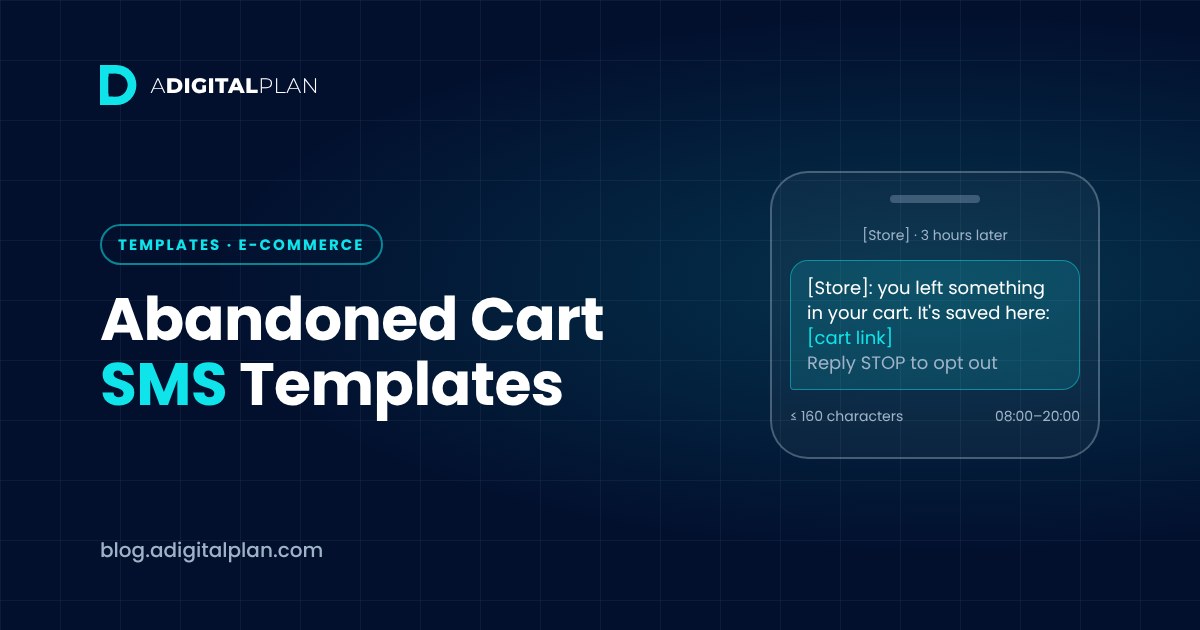
A good abandoned cart SMS template has three parts: your store name, a link back to the cart, and “Reply STOP to opt out”. Keep it to 160 characters or fewer, send it only to people who ticked a separate SMS marketing box, and send it between 08:00 and 20:00. Below are five templates to adapt, plus the consent and timing rules that make them safe to send.
This guide is for online store owners, from beginner to expert, who want to add a text to their cart recovery and turn more abandoned carts into orders instead of lost sales. Every template is an example to adapt: swap in your own store name, link and policy details.
Want the text and the emails around it written for your store? The free abandoned cart recovery course builds one SMS and three emails, with the consent and exit rules, in about 51 minutes.
Start the free course →Before you send any abandoned cart text: consent
Consent comes first, because texting people who never agreed breaks the rules in many countries and costs you trust.
The rule the course uses is simple: only text people who ticked a separate SMS marketing box. Not the email box. Not a line in your terms. A tick box for texts, on its own.
Rules differ by country. In the UK, cart messages are direct marketing under PECR, and the ICO publishes current guidance. In the US, rules such as the TCPA apply to marketing texts. Check the current rules for every country you sell to, and use your SMS platform’s own compliance guidance. If you’re not sure whether you can text someone, don’t. This isn’t legal advice.
Remove anyone who replies STOP at once, and keep the opt-out instructions in every message.
What the rules say about texts, in plain words
The separate tick box is the course’s rule, and it’s deliberately stricter than the minimum in some places. Here’s what the official guidance covers at the time of writing:
- UK. The ICO’s guidance on PECR treats texts the same as emails. You need consent, or the soft opt-in for existing customers who bought or discussed buying something similar from you, and were given a simple way to opt out when you collected their number and in every message since. Every text must say who it’s from and give a way to opt out. The ICO notes this guidance is under review following the Data (Use and Access) Act 2025, so check the current version.
- US. Marketing texts fall under the TCPA and FCC rules, plus state laws and carrier requirements. The FCC’s quiet hours bar telephone solicitations before 8 a.m. or after 9 p.m. in the recipient’s local time; the course’s 08:00 to 20:00 window sits inside that. Klaviyo’s own guidance for US abandoned cart texts recommends double opt-in when you collect SMS consent.
- Everywhere else. Rules vary by country and sometimes by state. Use your SMS platform’s compliance guidance for each country you text, and keep a record of when and how each person agreed.
A separate SMS tick box keeps things simple: you always know who agreed to texts, and you never have to argue that an email sign-up covered them. This isn’t legal advice. If you’re unsure, ask a qualified adviser or don’t send.
The rules every abandoned cart SMS follows
These come straight from the course’s flow:
- Who: only people who ticked the separate SMS marketing box.
- When: 3 hours after the checkout was abandoned, between 08:00 and 20:00 only. If 3 hours lands outside that window, hold it until morning.
- What: your store name, the cart link and “Reply STOP to opt out”.
- Length: 160 characters or fewer, including the link.
- No discount. In the course flow, the last email is the only message that may carry an incentive. Keep the text a plain nudge.
- Stop at the order. If they’ve already ordered, the text never sends.
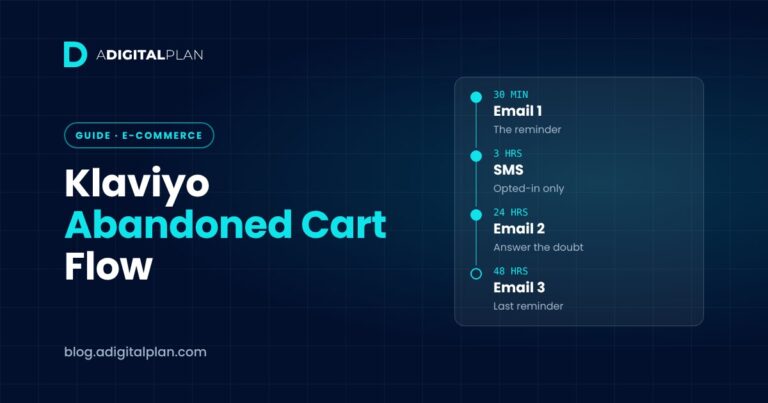
One text is enough. It sits between Email 1 at 30 minutes and Email 2 at 24 hours, as part of a short abandoned cart sequence, not a separate SMS campaign. It’s a follow-up reminder, so it doesn’t need to repeat everything in the first message. For how it fits into the whole flow, see this guide to building a Klaviyo abandoned cart flow.
Five abandoned cart SMS templates and examples
Pick one, based on the most common reason your buyers leave. Each is an example to adapt, not wording to paste unchanged. Anything in square brackets is yours to fill in from your actual policy.
The character counts below use a fictional store, “Oak & Fern”, and a short sample link, so you can see how close each one sits to 160. Your real count will change with your store name and link length.
1. The plain reminder
For when distraction is the main reason.
[Store]: you left something in your cart. It's saved here: [cart link] Reply STOP to opt outExample length: 104 characters.
2. The delivery answer
For when unexpected shipping costs surprise buyers at checkout. If you have a free shipping threshold, say so. Only state what your policy says.
[Store]: your cart is saved. Delivery is [cost], free over [threshold]. Finish your order: [cart link] Reply STOP to opt outExample length: about 127 characters, depending on your figures.
3. The returns answer
For when trust or “what if it doesn’t suit me?” is the worry.
[Store]: still deciding? You can return [items] within [days] days. Your cart: [cart link] Reply STOP to opt outExample length: about 125 characters.
4. The no-pressure nudge
For buyers who are simply not ready yet.
[Store]: no rush. Your cart is here when you're ready: [cart link] Reply STOP to opt outExample length: 100 characters. Check how long your platform keeps a cart before you promise it’s waiting.
5. The product question
For when buyers hesitate over something about the product, such as size or fit.
[Store]: questions about [sizing]? Our [size guide] is on the product page, and your cart is here: [cart link] Reply STOP to opt outExample length: about 140 characters. This is the longest, so check it carefully.
How to choose the right template
Don’t guess the reason. The course sorts 20 to 50 customer questions and 10 to 30 reviews into six reasons buyers leave: cost or delivery surprise, comparing, not ready yet, distraction, trust and effort. Whichever comes up most decides your Email 2, and it’s a good guide for the text too.
| Top reason | Template to start with |
|---|---|
| Distraction or effort | 1. The plain reminder |
| Cost or delivery surprise | 2. The delivery answer |
| Trust | 3. The returns answer |
| Not ready yet or comparing | 4. The no-pressure nudge |
| A product question | 5. The product question |
Writing tips for abandoned cart text messages
- Store name first. People need to know who’s texting before anything else.
- One clear call to action. The cart link is the only thing you want them to tap, and it should open their saved cart or the checkout page, not your homepage.
- A personal touch, if it fits. If your platform has their first name or the abandoned items, you can add them, but every extra word counts towards the 160.
- Say only what your policy says. If delivery or returns terms change, update the text the same day.
- Watch special characters. Emoji and some symbols can shorten how much fits in one message. Check the final text in your platform’s character counter.
- No false urgency. Don’t claim stock is low unless it is. Keep the opt out language in every message, however short.
- Test with a real cart. Send it to your own phone and tap the link before you switch it on.
Write your own with Claude
If none of the templates fits, ask Claude to draft one from your own policy. Here’s an example prompt to adapt:
Write one abandoned cart SMS for my store, [STORE NAME].
The main reason buyers leave is: [REASON].
Here is the relevant part of my policy: [PASTE DELIVERY OR RETURNS TERMS].

Rules:
- Start with the store name.
- Include [CART LINK] once.
- End with "Reply STOP to opt out".
- 160 characters or fewer in total, including the link.
- No discount, no urgency claims, nothing my policy doesn't say.

Give me three versions and the character count for each.
Remove names, emails, phone numbers and order numbers from anything you paste in first. They’re personal data.
How the SMS fits with your abandoned cart emails
In an abandoned cart flow, each abandoned cart message has a different job, and the text works because the emails around it do the rest:
- 30 minutes, Email 1: the reminder, with the item, the cart link and your delivery and returns terms.
- 3 hours, SMS: the short nudge, to SMS subscribers only.
- 24 hours, Email 2: the answer to the top worry, with 2 or 3 real reviews quoted word for word.
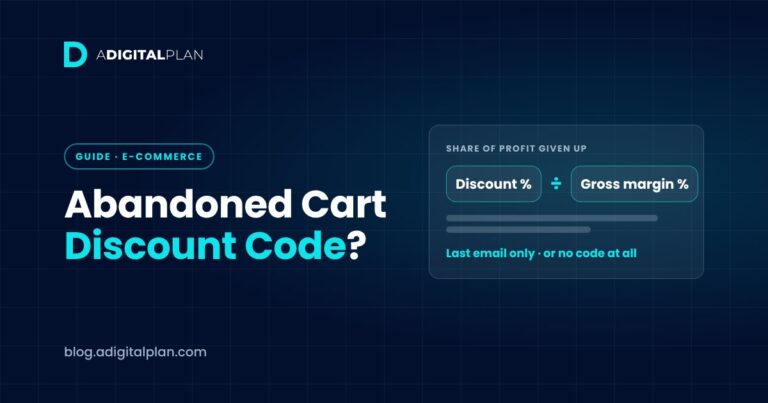
- 48 hours, Email 3: the last reminder, and the only place an incentive may go. Whether to offer one is a sum, not a hunch; see how to decide on an abandoned cart discount code.
Every message stops the moment the person orders, so nobody who completes their purchase gets another reminder.
Combine SMS with your other cart recovery messages
Abandoned cart SMS messages work best as one part of your cart recovery, not a separate SMS marketing strategy. A few ways to keep the channels working together:
- One channel at a time. Don’t send the text and an email in the same hour. The 3-hour SMS sits in the gap between Email 1 and Email 2 for that reason.
- No repeats. The text shouldn’t copy previous messages word for word. A short, straightforward reminder with the saved cart link is enough.
- Push notifications and other communication channels. If your store has an app or browser push, treat it like SMS: separate consent, one message, and stop at the order.
- Real urgency only. “Selling fast” or “limited stock” claims belong in a text only if they’re true for that product today. If you can’t check it automatically, leave it out.
- Listen to replies. Some customers will reply with a question. Make sure someone on your customer service team sees those replies, because a text answered quickly can recover the cart better than any template.
Shopping cart abandonment won’t disappear, and not every customer’s cart can be recovered. The goal is to remind customers once, politely and lawfully, and let the emails answer the doubt.
Frequently asked questions
What should an abandoned cart SMS say?
Your store name, a short line, the cart link and “Reply STOP to opt out”, in 160 characters or fewer.
When should I send an abandoned cart text?
The course sends it 3 hours after the checkout was abandoned, between 08:00 and 20:00 only, and only to people who ticked the separate SMS box.
How many abandoned cart texts should I send?
One. The emails do the rest. More SMS messages add pressure without answering the buyer’s doubt.
Should an abandoned cart SMS include a discount code?
Not in the course flow. The last email is the only message that may carry an incentive, so the text stays a plain reminder.
Are abandoned cart emails legal?
They’re direct marketing, so you need consent or another lawful basis, such as the UK soft opt-in. The course also gives texts their own separate tick box, which is stricter than some rules require. Check the rules for each country you sell to, such as the ICO’s guidance in the UK or the TCPA in the US. If unsure, don’t send.
Can I use a free abandoned cart SMS template?
Yes. The five above are free to adapt. Change the wording to match your store and your policy, and check the final length.
Add the SMS to a complete flow with the free course
The free Recover Your Abandoned Carts course builds one complete flow: three emails, one SMS, the consent rules, the exit rules and a test checklist. It’s three lessons and a live workshop, about 51 minutes in total, with six Claude prompts to write every message from your own policy, customer questions and reviews. It works with Klaviyo, Shopify Email, Omnisend, Mailchimp and most other platforms.