How to Get SMMA Clients When You’re Starting Out
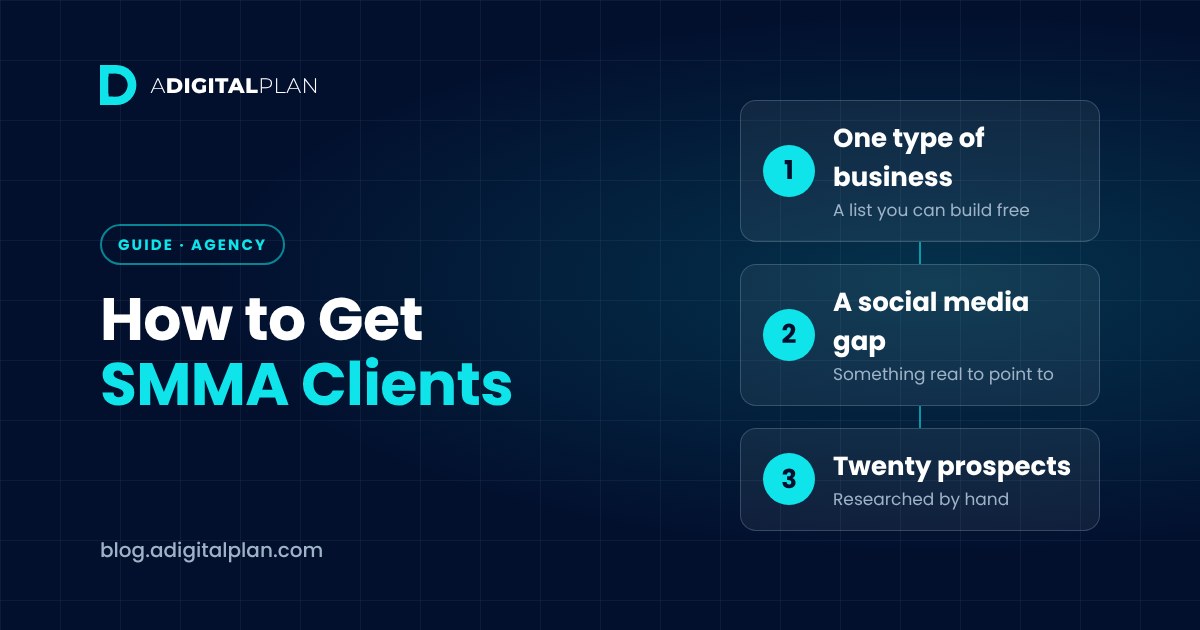
To get SMMA clients when you’re starting out, pick one type of business, find the ones with a visible social media gap, and send twenty of them a short message about that gap. You don’t need a portfolio, but you do need one specific, true reason to contact each business.
This guide is for social media marketing agency (SMMA) owners and freelancers, from beginner to expert, who want paying clients rather than more followers. It covers how to choose a niche, what to look for, a short SMMA cold email and LinkedIn note you can adapt, and how to land your first SMMA client with no case studies.
Want the prompts? A free cold outreach course built for agency owners turns your research into openers and a four-message sequence for LinkedIn and email. No card needed.
Start the free course →Why most SMMA outreach gets ignored
The usual advice is to send hundreds of direct messages a day. Local business owners receive so many “I love your page, want more followers?” messages that they’ve stopped reading them. Volume makes it worse, not better.
What works more reliably is the opposite: fewer businesses, better research and a message that shows you’ve actually looked.
Step 1: Choose one type of business
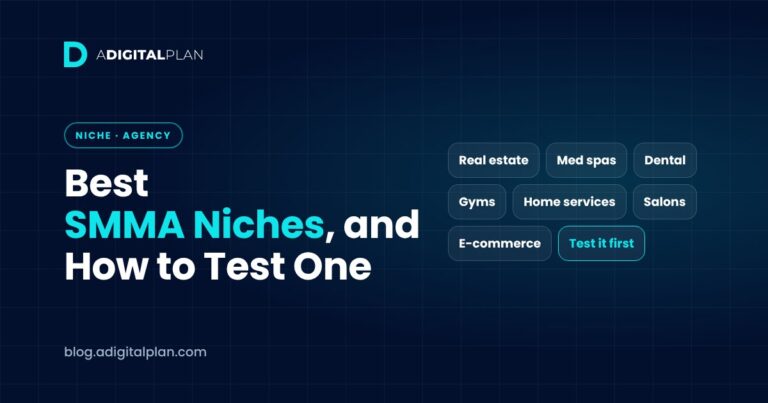
“Small businesses” isn’t a niche. Choose a group you can list for free, such as independent gyms, salons, restaurants or real estate agents in one area. If you need help choosing, the free Agency AI Niche & ICP Finder works from your own experience.
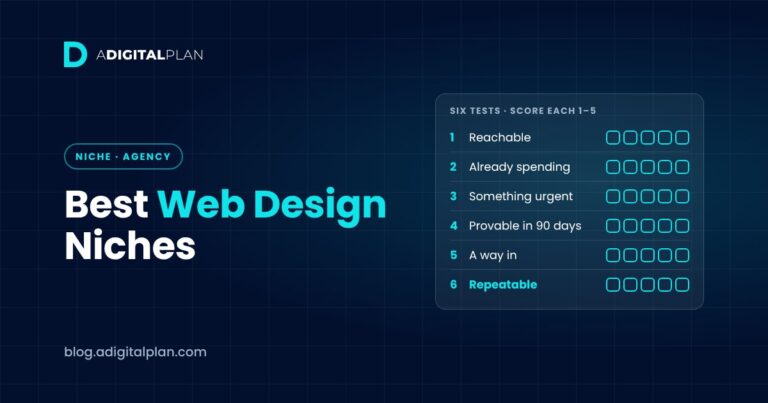
A narrow niche also tells you where your ideal clients are reachable: which social media platforms they use, which Facebook groups or local networks they’re in, and whether LinkedIn or email is the better channel. For candidates to test, see these SMMA niche ideas and how to check them.
Step 2: Look for a visible social media gap
Look for something specific you can point to:
- They’re hiring a social media or marketing role, which shows a budget and a need.
- Posting stopped a few months ago, after being regular.
- A launch went quiet: a new product, menu or service with little or no social posting about it.
- Reviews are strong but invisible: happy customers on review sites, none of it shared on social.
- Questions go unanswered in comments or messages.
- They’re running paid ads that send people to a profile that looks abandoned.
Follower count and founding year are decoration, not reasons. If you can’t find anything real, drop that business.
Step 3: Research twenty prospects by hand
About four minutes each, using public pages only: their profiles, website, reviews and job adverts. Note one checkable thing per business, and who the decision maker is. Twenty prospects take an evening.
Step 4: Write a short opener
On LinkedIn, keep a connection note under 300 characters with no link. For cold email outreach, use a lower-case subject line under 45 characters and keep the body under 90 words. Here’s an SMMA cold email template in that shape; the same body works as a LinkedIn note.
Illustrative example only (fictional gym and name, not a real send):
Subject: your new classes
Hi Jo, saw you’re hiring a part-time social media assistant. Your reviews are full of members talking about the new classes, but none of that is on Instagram yet. I help independent gyms turn reviews into posts. Open to a quick chat?
It’s specific, checkable and makes one ask. A calendar link plus “or just reply” would be two asks, and two asks is none.
A real opener that got replies for me was even shorter, a single question about time saved:
“Do you want to increase your leads without having to trawl through databases and have the whole process automated?”
It speaks to the job the owner hates doing, not to the service you sell.
Step 5: Follow up across fourteen days
Send four messages: something new, proof only if you can evidence it, something useful that asks for nothing, and one final direct ask. The third message, which asks for nothing, is what makes four messages acceptable rather than pushy.
Step 6: Diagnose before you change anything
After the full sequence, find the one stage that broke and fix only that: the list, the research, the opener or the follow-up. Sending more is almost never the fix.
How the course demo handles it
The course uses a fictional teaching demo, Apex AI, a booking-automation agency for local businesses with just one anonymous result it can reference. It targets three South London gyms. One has a job advert naming the problem (a strong trigger), one has reviews saying it unprompted (moderate), and one has nothing usable, so it’s dropped.
The demo also keeps an opener that comes back generic and shows the instruction that fixes it. The point is the same for any SMMA: when an opener is generic, the research was thin. Spend four more minutes, not a better prompt.
Other ways to find SMMA clients
Outreach works best alongside a few slower routes:
- Referrals from existing clients. Ask after a good month, and name the kind of business you’d like to meet next.
- Other agency owners. Web designers and SEO agencies often get asked about social media management. Referrals can run both ways.
- Local networks and Facebook groups. Attend events and join groups your ideal clients use, and help before you pitch.
- Your own profiles. Treat your agency’s social media posts as a live portfolio, because prospects will check them.
- Content marketing. Short, practical posts and how-to guides for your niche bring inbound leads over time.
Should you offer a free social media audit?
A free audit is common SMMA advice. A long one the owner didn’t ask for rarely gets read. One specific observation in your first message does the same job in a sentence. If they reply, that’s the moment to offer more detail.
Getting your first SMMA client with no case studies
You don’t need success stories or client testimonials yet. In the course demo, the strongest opener carries no claim at all: it simply names one specific, true thing about the business. Use your first clients to build social proof you can share later, with their permission.
Your warm network helps too. For routes that don’t involve outreach, such as referrals, partnerships and content marketing, see how to get agency clients without cold outreach. If clients ask for websites or search as well, see how to get web design clients and how to get SEO clients.
What to offer your first SMMA clients
Potential clients reply faster when they can picture exactly what they’d get. Before you send anything, decide on one simple offer for your niche:
- Social media management. Planning, writing and posting on the one or two social media platforms your niche actually uses, plus replying to comments and messages.
- Social media ads. Running paid ads for a local business, usually with a small ad campaign first so the client can see how it works before committing more ad spend.
- A content-only package. Turning reviews, photos and staff knowledge into posts the owner approves and publishes.
Pick one and name it in your opener only if it matches the gap you found. A gym with unshared reviews needs content; a salon running Facebook ads to an empty profile needs management first. Leading with the client’s pain point, rather than a menu of social media marketing services, is what makes the message feel personalised.
If you want some risk reversal for a new client, keep it honest: a short first month or a clearly scoped trial, with the key metrics you’ll report agreed upfront. Never promise followers, leads or revenue.
Building a client base that grows
Consistent outreach gets your first few clients. Keeping them, and turning them into referrals, is what builds a steady client base:
- Report what the owner cares about. Enquiries, bookings and messages from social count for more than reach or likes.
- Ask for permission early. Agree at the start that you can share anonymised results, so you have proof for the next SMMA client.
- Stay in one niche. Each new client in the same niche makes the next message sharper and the next case study more relevant.
- Add inbound slowly. Your own social media agency profiles, a few how-to guides on your website and posts that answer niche questions can bring in qualified leads and some organic traffic from search engines over time.
Tools that send automated follow-ups or mass messages can get accounts restricted and damage your name in a small local market. Keep LinkedIn outreach and cold email personal and manual, especially while you’re learning what works.
Frequently asked questions
Is SMMA still worth starting?
It depends on your niche, your proof and your outreach, not on the label. Agencies that pick a narrow group and research properly give themselves a much better chance than those messaging everyone.
How do I find clients for my SMMA?
Build a list of one type of business from free sources, such as map searches and directories, then research each one by hand. Never buy lists or scrape contact details, and check the marketing message rules where you and your prospects are based.
Should I use phone calls, DMs or email?
The course method is channel-agnostic and is built around LinkedIn and email. Phone calls and direct messages can work too, as long as the message is specific and makes one ask. Choose the channel your ideal clients actually use and that you can do well.
What’s the best strategy for a new SMMA?
One niche, one clear offer and twenty well-researched prospects. A narrow group gives you better leads to work with, and one sourced result in that niche will later do more than three impressive claims you can’t back up.
How many messages should I send a day?
Start with twenty well-researched prospects in total, not per day. Run the full sequence before scaling.
Get your first SMMA clients, free
The free Agency AI Cold Outreach Engine gives you six Claude prompts, a four-minute research checklist and a four-message sequence. It suits SMMA owners from beginner to expert and needs no tools, lists or case studies.