How to Get Web Design Clients Without Wasting Months
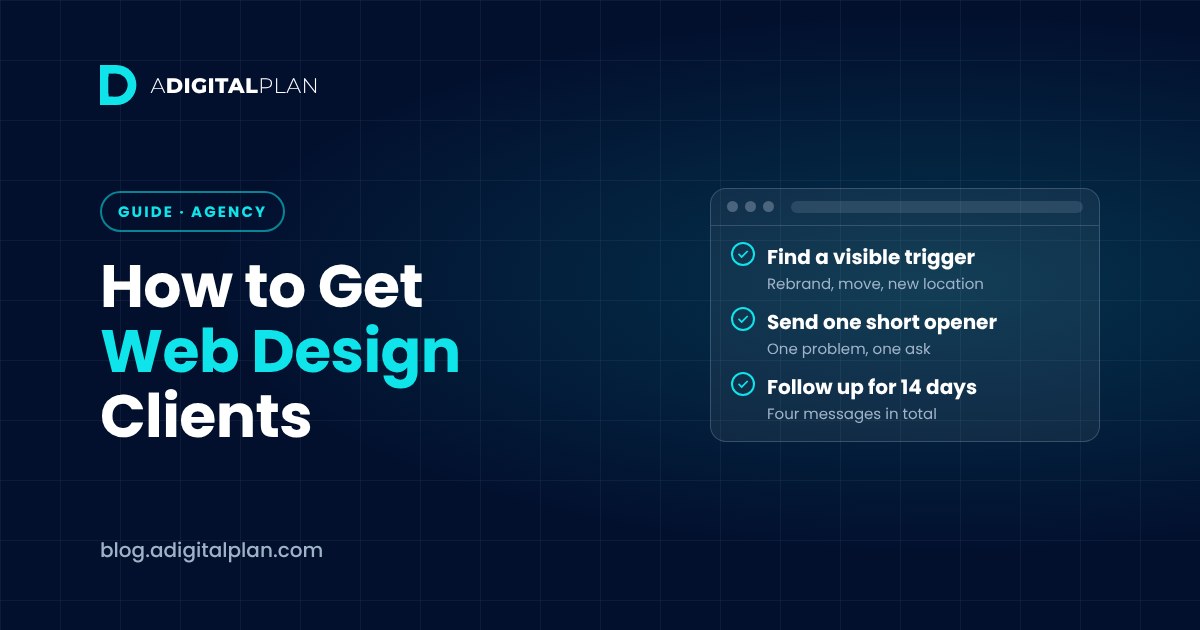
To get web design clients, pick one narrow group of businesses, find the ones whose websites are visibly holding them back, and contact twenty of them with a short message about one specific thing you noticed. Follow up over two weeks: fewer, better-researched prospects beat large lists of strangers.
This guide is for freelance web designers, web design studios and agency owners, from beginner to expert. It covers where to find potential clients and web design leads for free, how to research them, a short cold email you can adapt, and the other routes worth running alongside outreach.
Want the prompts that do the writing? This free AI cold outreach course for agencies turns your research into openers and a four-message follow-up sequence. No card needed.
Start the free course →Why most web designers struggle to find clients
Almost every business has a website, so it’s tempting to think everyone is a prospect. That’s the problem. “Small business owners who need a new website” isn’t a list you can build or a message you can write.
Most web designers who find clients reliably work the other way round: one type of business, a clear reason it needs help now, and a small number of well-chosen prospective clients. The rest of this guide follows that order.
Step 1: Choose one type of business
Pick a group you could list without buying data, such as independent dental practices, wedding venues or local trades in one area. If you can’t name where the list comes from, it’s not narrow enough.
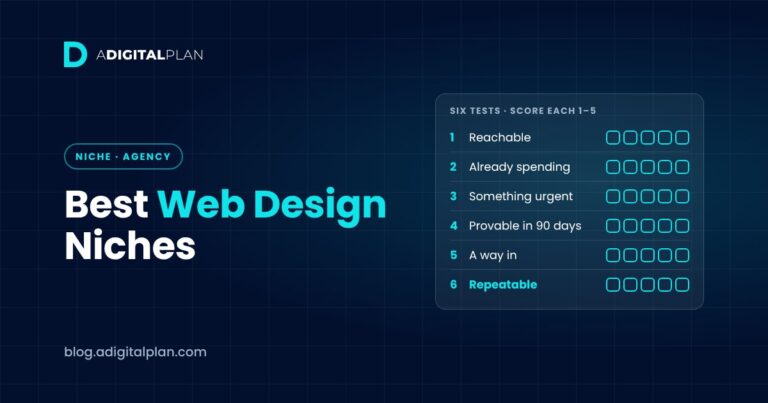
A niche also makes everything after this easier. Your portfolio, your messages and your own website can all speak to one specific audience instead of everyone, and your web design services start to sound made for them. For ideas to test, see these web design niches and what to check for each.
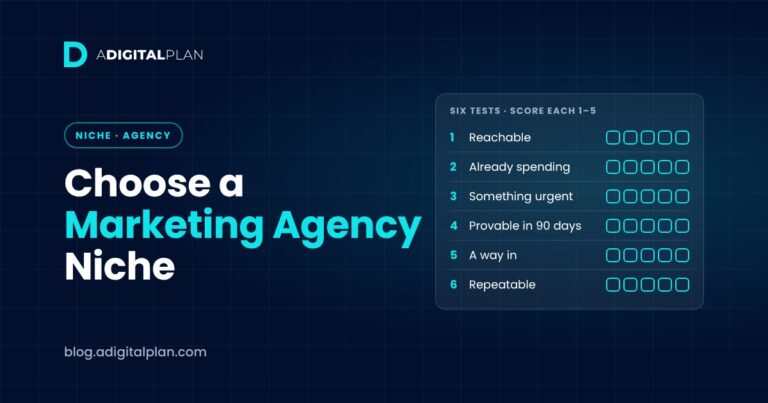
Not sure which group to choose? The free Agency AI Niche & ICP Finder helps you pick one from your own experience.
Step 2: Find businesses with a visible reason to care now
A business doesn’t buy a website because yours is nicer. It buys when something makes the current one a problem. Business owners care about bookings and enquiries more than design, so their pain points are rarely about how the site looks. Instead, look for signs you can check from the outside:
- They’re hiring for a role a better business website could support, such as bookings or reception.
- Reviews mention the website, such as customers saying the booking or contact form didn’t work.
- They’ve expanded with a new location, service or product the site doesn’t mention.
- The site doesn’t work well on a phone, for something people usually book or buy on mobile.
- Information is clearly out of date, such as old prices or past events still showing.
A job advert or a review that names the problem is strong. Something you guessed from a quick glance is not. If you can’t find anything specific, drop that business: it’s a legitimate outcome, not a failure.
Step 3: Build your web design leads from free sources
You don’t need a lead generation tool or a data subscription. Google Maps, industry directories and local business listings are enough to find businesses in one niche and area, along with their websites and public contact details.
Give each prospect about four minutes on public pages: their site, reviews, job adverts and social profiles. Note one specific, checkable thing. If it took you thirty seconds to find, it’s probably decoration rather than a reason.
Twenty prospects take an evening. It’s less time consuming than it sounds, and it’s enough to learn what works before you spend more time.
Step 4: Write a short opener about what you noticed
Keep it short, with no link and one ask. The course keeps email bodies under 90 words, with a lower-case subject line under 45 characters. Here’s a simple web design cold email template in that shape.
Illustrative example only (fictional business and name, not a real send):
Subject: your online booking form
Hi Sam, a couple of your recent reviews mention the booking form not loading on a phone. I build booking-focused sites for independent practices, and that’s usually a quick fix that stops lost appointments. Worth a short call to show you what I’d change?
Notice what it doesn’t do: it doesn’t praise their brand, quote their follower count, attach a portfolio or promise results. It names one problem the owner can check in a minute.
A real opener that worked for me took a different shape: one yes-or-no question about an outcome the owner already wants.
“Do you want your website design optimised so that it adds 5% extra conversions without increasing advertising spend?”
It works because it ties the design to money they’re already spending. If you put a figure in the question, like the 5% here, be ready to show where it comes from.
Step 5: Follow up properly
Most replies come later in a sequence, not from the first message. Send four messages over about fourteen days:
- Something new they didn’t know.
- Proof, but only if you can evidence it; otherwise, no claim at all.
- Something useful that asks for nothing.
- One direct last ask.
Each message should stand on its own, so it makes sense even if they never read the others.
Step 6: Judge the results, then fix one thing
Run the full fourteen days before deciding anything. If replies are low, find the one stage that broke: the list, the research, the opener or the follow-up. Fix that one thing for the next twenty. Sending more is almost never the answer.
Other ways to find web design clients
Outreach isn’t the only route, and the best client acquisition usually mixes a few:
- Word of mouth and existing clients. Happy clients are your warmest source. Ask after a good result, and name the kind of business you’d like to meet.
- Friends, family and past colleagues. Many designers find their first client this way. Tell people clearly who you help.
- Partnerships. Marketing consultants, accountants and other businesses that serve the same customers can refer work both ways.
- Networking events and online communities. Useful when you follow up afterwards and don’t pitch on day one.
- Content creation and your own website. Helpful content, such as a blog post answering the questions clients ask, shows your expertise. A clear about page and a landing page for each service help visitors from search engines understand what you do. It’s a long game.
- Freelance platforms. Some designers use them for early projects, but you’re competing on price with designers worldwide.
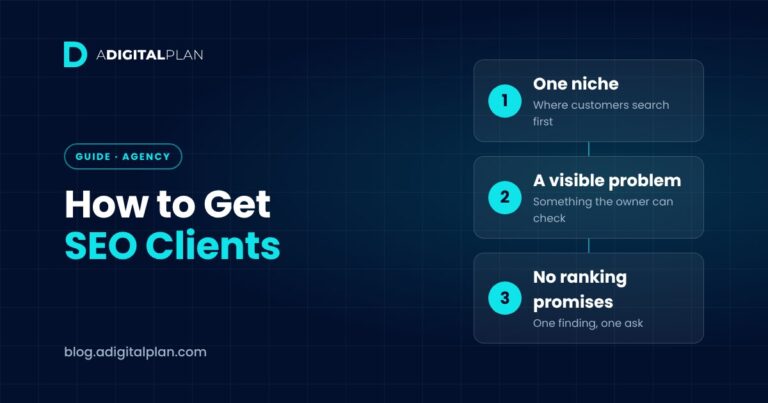
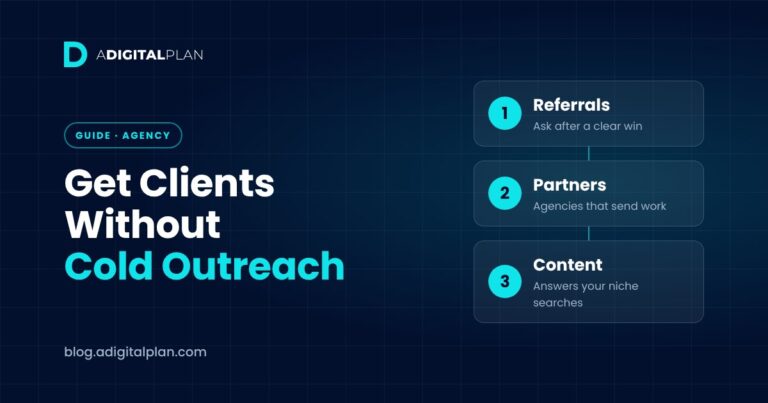
For more on these routes, see how to get agency clients without cold outreach. If you also offer search, getting SEO clients covers search-specific triggers.
How to get more clients from your own website and portfolio
Your own website is the one marketing channel you fully control, so treat it like a client project. A few tips:
- Optimise it for local search if you serve local businesses. A Google Business Profile, a page for each service and area, and a clear contact page help prospective clients who search for a website designer near them. SEO takes months, but it brings enquiries from people who are already looking.
- Show outcomes, not just screenshots. Business owners care about what a site does for their own business, such as enquiries, bookings and sales, more than how it looks. Where you have real, measured results from client work, show them with the client’s permission. Where you don’t, describe the problem you solved and leave the numbers out.
- Label concept work. Building sites for made-up businesses is a fair way to show you can build websites when you’re starting a web design business, as long as each one is clearly marked as a concept.
- Write blog posts that answer questions. Social media posts fade within days, while a useful post answering questions your clients actually ask can keep bringing visitors for months.
- Keep a simple mailing list. A short, occasional email to past enquiries and contacts keeps you in mind until they’re ready to pay for a new website.
Referrals, reviews and quick wins
Referrals from existing clients and family members arrive with built-in trust and often move faster than cold leads, but they’re unpredictable, so don’t make them your only source of new web design clients.
A short, free review of a prospect’s site can also start a conversation, because it shows your thinking on their real problem. Keep it to two or three specific points they can check, and don’t promise results.
Once your process works in one area, the same research-first approach works for international clients in the same niche. Check time zones and the marketing email rules where they’re based before you send business emails.
AI tools such as Claude can speed up the writing and help you summarise your notes, but the research that makes the message specific still has to be yours. The same goes for any web development or web design agency work you pitch: one real reason, one clear ask.
Frequently asked questions
How do I get my first web design client?
Start with people who already know you, then contact twenty carefully researched businesses in one niche. You don’t need a portfolio full of case studies; a specific, true observation about their site does more work.
How do I generate web design leads?
Build a short list of one type of business from free sources such as Google Maps and directories, then research each by hand. Avoid buying lists or scraping data, and check the marketing email rules where you and your prospects are based.
Is web design still in demand in 2026?
Businesses still need websites that bring in bookings and enquiries. Demand is easier to find in a niche where you can see the problem a better site would solve.
Can AI generate web design leads?
AI can help you write. The free course uses Claude to draft openers and follow ups from your research. Finding the right businesses and the real reason to contact them is still your job.
Do I need a portfolio to get web design clients?
It helps, but it doesn’t need to be large. Show work you’ve actually done, and if you build concept sites to show your skills, label them as concept work, never as client projects. Owners care more about what a site does for the business than how it looks.
Should I make cold calls instead?
Cold calls can work if you’re comfortable on the phone. The same rule applies on any channel: one specific, true reason to contact them and one ask.
Should I include a link to my portfolio?
Not in the first message. One ask is clearer than two, and a link can make a cold email more likely to be filtered.
Write better outreach, free
The free Agency AI Cold Outreach Engine gives you six Claude prompts covering your ideal client, voice, research brief, openers, sequence and diagnosis. It suits agency owners and designers from beginner to expert and needs no tools, lists or case studies.