How to Get SEO Clients: A Practical Guide for Agencies
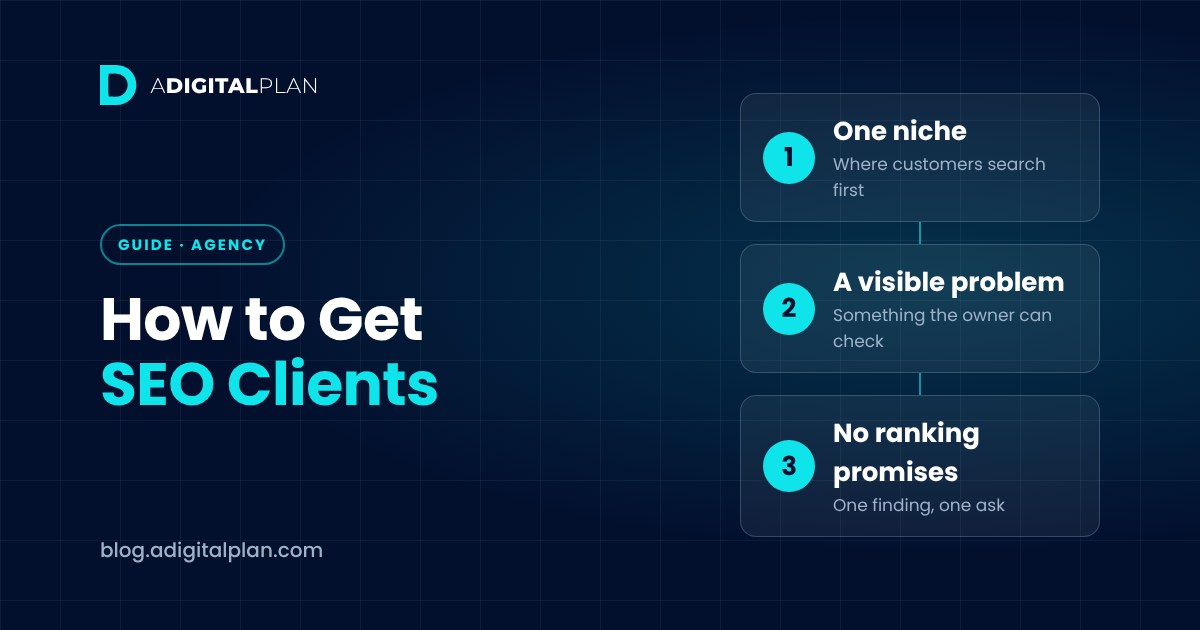
To get SEO clients, choose one type of business, find the ones with a visible search problem you can point to, and send each a short message about that one problem. Follow up over two weeks, and never promise rankings you can’t guarantee.
This guide is for SEO freelancers, SEO agencies and marketing agencies that offer SEO services, from beginner to expert. It covers where to find potential SEO clients, what to look for, an SEO cold email template you can adapt, whether to offer free SEO audits, and how to land your first SEO client without case studies.
Want help writing it? The free course that turns your prospect research into openers also builds a four-message follow-up sequence. No card needed.
Start the free course →Why getting SEO clients is harder than it looks
Small business owners receive a constant stream of “I can get you to page one” emails. Most are generic, many make promises nobody can keep, and owners have learned to ignore them.
That’s good news if you do it differently. A short message about something specific and true, with no guarantee, stands out against that noise.
Step 1: Pick a niche where search matters
SEO is easiest to sell where customers search before they buy: local businesses, professional firms, clinics and trades, most of them small businesses that rely on being found nearby. Ecommerce SEO is another option if you know online retail well. Choose one specific niche you can list from free sources, such as map searches or directories.
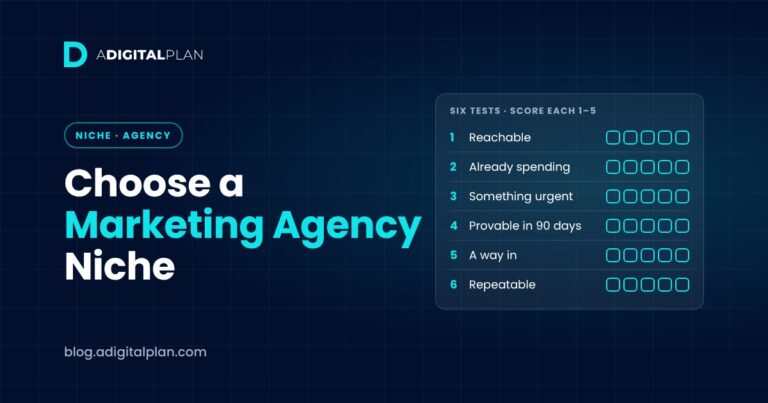
A narrow target market makes your outreach sharper, and it makes your own site and content easier to aim at your ideal SEO clients. If you’re still choosing, here’s how to choose a niche for your marketing agency.
Step 2: Find a visible search problem
Look for something you can show the owner, not a score from an SEO tool they’ve never heard of. For example:
- They don’t appear in a local search for their main service, while competitors do.
- A new location or service has no page of its own.
- The site recently changed, and old pages now lead nowhere, a basic technical SEO problem the owner can see for themselves.
- Their Google Business Profile is missing basics, such as opening hours or services.
- They’re paying for Google Ads on a service they don’t show up for in the normal results.
- They’re hiring for marketing, which suggests a budget and a gap.
If you can’t find anything specific in a few minutes, drop that business. Twenty strong prospects are worth more than a hundred weak ones.
Step 3: Research twenty by hand
Spend about four minutes per prospect on public pages: a search for their service and area, their website, their business profile and any job adverts. Note one checkable fact. You don’t need full keyword research or a paid SEO tool at this stage. Twenty prospects take an evening.
Step 4: Write an opener with no guarantee
Keep it short: no link, one ask and no promise of rankings. The course keeps email bodies under 90 words, with a lower-case subject line under 45 characters. Here’s an SEO outreach email template in that shape.
Illustrative example only (fictional clinic and name, not a real send):
Subject: your new clinic page
Hi Priya, I noticed your new Wandsworth clinic doesn’t have its own page, so it’s not showing when people search for physio nearby. That’s often one of the quicker fixes in local SEO. Happy to send over what I’d add, if that’s useful?
It names one problem the owner can check in a minute, and it doesn’t guarantee a result.
A real opener that worked for me was a single question aimed at a business already paying for Google Ads:
“Do you want to target keywords that actually buy products as opposed to the huge bill you get each week from Google that doesn’t generate much revenue?”
It names a cost the owner feels every week and offers a better use of it, without promising a ranking.
Step 5: Follow up over fourteen days
Send four messages in total: something new, proof you can evidence (or no claim), something useful that asks for nothing, and one direct last ask. Most replies arrive after the first message, so stopping at one wastes the research.
Step 6: Fix one thing at a time
Wait until the full sequence has run. If replies are low, work out which stage broke, whether the list, the research, the opener or the follow-up, and change only that for the next batch.
Should you offer free SEO audits?
Free SEO audits are common advice, and a small one can start a conversation. The trouble is the long, automated kind: twenty pages of tool output the owner didn’t ask for and doesn’t understand.
A better approach is to put one specific finding in your first message, as in the example above. If they reply, offer more detail then. That way the “audit” is a conversation, not a document they’ll never open.
Your first SEO client
Without case studies, your first client is likely to come from your warm network or from very specific outreach. You don’t need a result to point to: a precise, true observation about their search problem is what gets the reply. Use your first projects to build evidence you can quote later, such as a short case study or testimonial, always with permission. One result you can source beats three impressive ones you can’t.
Other ways to find SEO clients
Cold emailing isn’t the only route. These work alongside it:
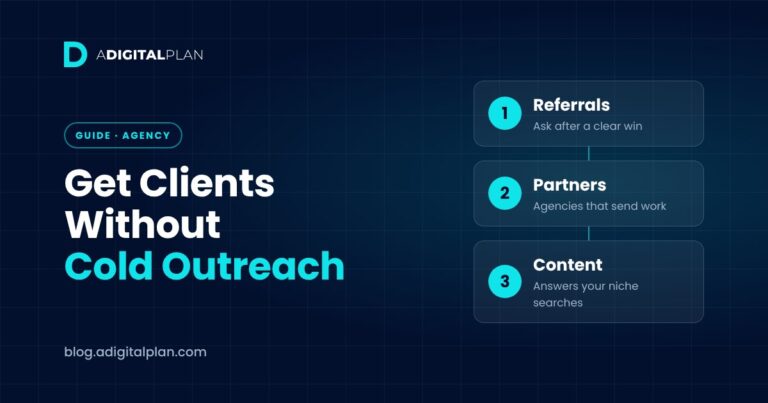
- Partnerships with web designers. Many web designers build sites but don’t offer SEO, and their clients often ask. Referrals can run both ways.
- Referrals from happy clients. Ask after a clear win, and name the kind of business you’d like to meet.
- Content marketing on your own website. Blog posts that answer the questions your target audience searches for show your SEO expertise and bring inbound SEO leads over time. If your own site ranks for your niche, that’s proof in itself.
- LinkedIn. Posting practical SEO tips for your niche and commenting usefully on others’ posts builds familiarity before you ever send a message.
- Communities and industry events. Useful when you help first and pitch later.
- Freelance platforms. An option for early projects, though you’ll often compete on price.
For more on these, see how to get agency clients without cold outreach. If you build sites too, how to get web design clients covers website-specific triggers.
SEO outreach mistakes to avoid
- Promising rankings. Nobody controls search results, and owners know it.
- Sending tool screenshots. A score they don’t understand isn’t a reason to reply.
- Buying lists or scraping emails. Build your own list, and check the marketing email and data protection rules where you and your prospects are based.
- Listing every service. One problem and one idea beats a menu of SEO packages.
- Stopping after one message. Most replies come later.
Build trust before potential clients ever reply
Prospective clients will look you up before they answer. Make sure what they find backs up your message:
- Your own site ranks for your niche. If you sell local SEO to physios, it helps if your own website shows up for searches about physio marketing. It’s the simplest proof of SEO expertise you can offer.
- Case studies with permission. Describe the client’s starting problem, what you changed and what happened, using figures the client has agreed you can share.
- Client logos and testimonials, only with consent. Never borrow logos or write quotes for clients.
- Useful content in public. Practical SEO tips on LinkedIn and other social media platforms, or short videos that walk through a fix, show how you think before anyone pays you.
None of this needs paid tools. Free tools such as Google Search Console and Google Business Profile show most of what a small business owner cares about: Google visibility, search terms and whether customers can find them.
Turn first projects into steady SEO leads
Getting new SEO clients consistently usually comes from a mix of outreach, referrals and inbound leads, not one channel. A few habits help each project produce the next one:
- Agree what success looks like before you start. Organic growth takes time, so say plainly what you’ll work on first, when they should expect to see movement and what you can’t control.
- Report in business terms. A short monthly report that links rankings, traffic and technical SEO fixes (such as Core Web Vitals or broken pages) to calls, bookings or sales is easier to renew than a dashboard of numbers.
- Keep to a communication schedule. Clients who hear from you regularly are less likely to wonder what they’re paying for.
- Package the work clearly. Simple monthly SEO packages, such as local SEO, content or link building, make it easier for happy clients to refer you, because they can say exactly what you do.
- Set up referral partners. Web designers, paid ads specialists and other digital marketing agencies that don’t offer SEO can pass work your way. Some SEO companies run a simple affiliate program or referral fee for this.
The goal is high quality clients who stay, not more SEO clients who leave after three months. A smaller roster that renews is easier to grow than one you have to replace.
Frequently asked questions
How do I get my first SEO client?
Start with people who know you, then send short, specific messages to twenty businesses in one niche. A clear, checkable observation can work without a case study.
How do I get clients for an SEO agency?
Pick one niche, find businesses with a visible search problem, and contact a small number with a specific message and a proper follow-up sequence. Add referrals and partnerships as you grow.
What should an SEO cold email include?
One specific problem you found, why it matters to them, and one simple ask. No link, no guarantee and no long list of services.
Can I get SEO clients for free?
Yes. Map searches, directories and your own research cost nothing, and the free course needs no paid tool or data subscription.
How many prospects should I contact?
Start with twenty well-researched businesses and run the full sequence before judging the results.
Find SEO clients the right way, free
The free Agency AI Cold Outreach Engine gives you a four-minute research checklist and six Claude prompts that write your openers and a four-message sequence from your own research. It suits agency owners from beginner to expert and needs no list, tool or case study.